Friends,
For nine days in the summer of 1553, Lady Jane Grey was queen of England. But Jane’s story is about more than a remarkably short reign: it is the story of a well-educated young woman pulled into a succession struggle, tried for treason, and executed alongside her husband.
To understand what happened, look beyond the familiar image of a helpless girl at the scaffold—and beyond the idea that Queen Mary I was simply a villain.
Childhood
Lady Jane Grey was born around 15371 into a family shaped by ambition and discipline. The eldest daughter of Henry Grey, Duke of Suffolk, and Lady Frances Brandon, she had a royal connection through her mother, a granddaughter of Henry VII. Jane was also a cousin of the future Edward VI—a family tie that would one day place her at the center of a struggle for England’s crown.

Jane’s childhood was strict, and she later recalled finding more comfort in books than in the pastimes expected of a young noblewoman. She had an exceptional education, studying with leading scholars and learning Greek, Latin, Hebrew, Italian, and French. Her devotion to Protestant ideas grew alongside her learning, giving her convictions that would matter greatly in the political storms ahead.

Portrait, c. 1545
Around the age of nine, Jane went to live in the household of Queen Catherine Parr, Henry VIII’s widow, and Catherine’s new husband, Thomas Seymour. The home offered a warmer atmosphere than the one she had known, and Jane later remembered that affection with gratitude. But that brief chapter ended when Catherine died after giving birth in 1548.
A Political Marriage
After Catherine Parr’s death, Thomas Seymour saw Jane as a possible bride for the young King Edward VI—a match that could have raised Seymour’s influence at court. But his own ambitions soon brought him down: arrested and executed for treason in 1549, he left Jane’s future in the hands of other powerful men.2
The next to shape it was John Dudley, Duke of Northumberland, who dominated Edward’s government as the young king’s health declined. Determined to protect England’s Protestant succession—and his own influence—Northumberland arranged for Jane to marry his son, Lord Guildford Dudley3.

It’s important to note that this union strengthened Northumberland’s influence, but the marriage may not have begun as a plan to make Jane queen. That possibility grew urgent as Edward VI became gravely ill: determined to keep his Catholic half-sister Mary from inheriting and preserve England’s Protestant direction, Edward devised a new succession that eventually named Jane.4
Northumberland supported and benefited from the plan, but it’s too simple to say he merely forced it on the king; the marriage and the succession plan came together in the tense final months of Edward’s reign.
They wed in May 1553, when Jane was about fifteen or sixteen. Accounts suggest she resisted the match, wary of the Dudleys’ ambitions, but parental pressure and politics left her little room to choose.
Their marriage began as a political arrangement, and Jane may not have welcomed it at first. But the surviving hints suggest that, in their brief time together, she and Guildford may have developed genuine affection.
A Fight for the Crown
Edward VI died on 6 July 1553, but Jane wasn’t told until three days later, when she was summoned to Syon House. There, John Dudley, Duke of Northumberland, announced the king’s death and told her that Edward had named her successor. The Privy Council then knelt to her, making the news real in a startling way.

Jane later recalled that she was overwhelmed, wept, mourned Edward, and said she felt unfit to rule; she prayed for strength only if the crown was rightfully hers.
‘Declaring to them my insufficiency, I greatly bewailed myself for the death of so noble a prince, and at the same time, turned myself to God, humbly praying and beseeching him, that if what was given to me was rightly and lawfully mine, his divine Majesty would grant me such grace and spirit that I might govern it to his glory and service and to the advantage of this realm.’ – Lady Jane as reported by www.hrp.org.uk

The next day, 10 July, Jane entered the Tower of London and was publicly proclaimed queen, though she was never crowned. The announcement seems to have been met with little enthusiasm. Many people knew little about Jane, and her sudden rise to the throne looked like an attempt by Northumberland to bypass Princess Mary, whom many considered the rightful heir, and place his own daughter-in-law on the throne.
A Stronger Claim to the Throne
When Edward died on 6 July 1553, Mary was already leaving court. Two days earlier, she had left Hunsdon after hearing that Edward was gravely ill and that she might be in danger. She was making for her estates in East Anglia, where she had loyal supporters.5

Master John (floruit 1544-1545) – Scanned from the book The National Portrait Gallery History of the Kings and Queens of England by David Williamson
Accounts differ slightly on the exact place and day she heard the news. One scholarly account says she was told around 8 July, probably at Kenninghall; another places the first message at Euston Hall, on the way there. A messenger from London brought the news, and she waited for confirmation before openly claiming the throne.
By 9 July, from Kenninghall, she wrote to the Privy Council, asserting her claim and demanding they recognize her as queen.
The Privy Council switched sides and proclaimed Mary queen in London. That public proclamation was met with great rejoicing, though it didn’t mean every person supported her. Many regarded Mary as the stronger rightful heir under Henry VIII’s succession settlement; others rallied for political or religious reasons.
Side note:
Elizabeth was at Hatfield House in Hertfordshire when Edward VI died. She didn’t flee: unlike Mary, she stayed where she was, avoiding the immediate succession struggle. The Privy Council summoned her to London, but she reportedly pleaded illness and remained at Hatfield.
A New View from the Tower
The Tower was Jane’s palace before it became her prison. She and Guildford entered it on 10 July 1553 as part of her accession; it was customary for a new monarch to stay there before a coronation. When Mary was proclaimed queen on 19 July, Jane and Guildford were still inside. Guards were posted, and Jane’s father left to declare for Mary.6 So they weren’t seized in a dramatic arrest elsewhere—their status changed to prisoners where they already were.
Their supporters had different fates. Jane’s father, the Duke of Suffolk, could initially leave, while Northumberland was captured and brought to the Tower. He was executed on 22 August 1553. Some other participants were arrested, but Jane’s allies weren’t all rounded up together.
Jane and Guildford were treated as high-status prisoners, not kept in a dungeon. Jane had attendants and some access to the Queen’s Garden. They were housed apart—Jane near Tower Green, Guildford in the Beauchamp Tower—and historians think they may have had some contact, though the evidence is limited.
Lady Jane found Guilty of Treason
The trial was real but brief and largely a formality. On 13 November 1553, Jane and Guildford were tried at Guildhall in the same proceeding as Thomas Cranmer and Guildford’s brothers Ambrose and Henry. Jane and Guildford pleaded guilty and were sentenced to death. The surviving records preserve the indictments and verdicts, not a full transcript of testimony or a detailed defense.
It wasn’t simply a case of invented accusations. Jane was proclaimed queen, entered the Tower as queen, and signed documents using that title. But the indictment framed those actions as a plot to overthrow and harm Mary; that alleged intent is harder to establish, especially since Jane said she had been pressured to accept the crown.

The legal picture was contested, too: Edward’s succession plans named Jane, while Mary had a claim under Henry VIII’s earlier succession law. So the trial treated Jane’s actions as treason against Mary, but that doesn’t prove every claim about Jane’s motives—or mean the succession dispute was legally simple
Leniency Lost
Mary reprieved them; she didn’t pardon them. After Jane and Guildford pleaded guilty in November 1553, they were sentenced to death, but Mary initially kept them imprisoned in the Tower rather than carrying out the sentence.
That changed after Wyatt’s Rebellion in early 1554.7 Jane’s father joined the revolt, and Mary’s advisers feared Jane could become a figurehead for another attempt to remove her—even though Jane herself wasn’t involved. Mary reluctantly agreed to execute the couple. She reportedly offered to spare them if they converted to Catholicism; Jane refused.8

The End of the Reign of Lady Jane
Jane and her husband were in the Tower for about seven months. Mary had already spared her once, but Wyatt’s Rebellion—and Jane’s father joining it—made Mary fear Jane could become a focus for another uprising.
She apparently didn’t meet Guildford for a private farewell. A contemporary account says she saw him being led away, then saw his body brought back to the Tower chapel. The often-repeated story that she refused a last visit is less certain.

By the account we have, Janee faced the scaffold with remarkable composure: she prayed, spoke calmly, and asked the executioner to hurry. But blindfolded, she panicked when she couldn’t find the block and cried out for help. That doesn’t erase her courage—it makes the moment painfully human. The axe fell once she was guided to the block; the record doesn’t tell us whether it was a single clean stroke, so we can’t be certain how swift it was.
Jane and Guildford were buried in the Chapel Royal of St Peter ad Vincula, inside the Tower of London. The chapel is their resting place, though the exact location of their graves is uncertain.
Mary initially pardoned Jane’s parents, Henry Grey and Frances. But after Henry joined Wyatt’s Rebellion, Mary had him executed on 23 February 1554. Frances and Jane’s sisters, Katherine and Mary, survived. Guildford’s father had already been executed, but his surviving brothers were imprisoned rather than executed. So Mary showed mercy to some of the family
Final Thoughts
Jane can be remembered as both a victim of Tudor power politics and a real person with convictions, intelligence, and a voice of her own. Mary, meanwhile, can be understood as a monarch defending a contested throne who still made the consequential choice to execute her cousin. Holding both truths together makes the story more complicated—and more compelling—than a simple tale of a cruel queen and an innocent martyr.
Until next time, Keep Reading and Stay Caffeinated.
For those hungry to explore more, click below to find additional reading:
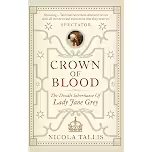
Crown of Blood: The Deadly Inheritance of Lady Jane Grey by Nicola Tallis. In this dramatic retelling of an often misread tale, historian and researcher Nicola Tallis explores a range of evidence never before used in a biography to sweep away the myths and reveal the moving, human story of an extraordinarily intelligent, independent, and courageous young woman.

Innocent Traitor: A Novel of Lady Jane Grey by Alison Weir. When the premature death of Jane’s adolescent cousin—and Henry’s successor—King Edward VI thwarts their original ploy, Jane unwittingly finds herself at the center of the struggle for supremacy. Though she has no ambition to rule, preferring to immerse herself in books and religion, she is forced to accept the crown and, in doing so, sets off a firestorm of intrigue, betrayal, and tragedy.
Subscribe below to stay up to date on myths, legends, mysteries, and the chaos I call my life.

If you’re looking for your next favorite read, check out my series, The Raven Society. This spellbinding historical fantasy series takes us on a heart-pounding journey through forgotten legends and distorted history. Uncover the chilling secrets of mythology and confront the horrifying truths that transformed myths into monstrous realities. How far will you go to learn the truth?
The Writer and The Librarian (Book 1):
Signed copies at:
https://rlgeerrobbins.com/product/the-writer-and-the-librarian-the-raven-society-book-1/
Footnote:
- Lady Jane Grey was born around 1537, though her exact birth date—and possibly even the year—is uncertain. ↩︎
- Thomas Seymour was arrested in January 1549, amid a fierce power struggle with his brother, Edward Seymour, Duke of Somerset, who governed for the young King Edward VI. Thomas was accused of trying to kidnap the king, gain control of him, and marry Princess Elizabeth without the council’s permission—moves that could have strengthened Thomas’s claim to power. (hrp.org.uk)
The immediate trigger was a reported late-night attempt to enter Edward’s rooms at Hampton Court while carrying a loaded pistol. But the full story remains uncertain: Parliament condemned Seymour by an Act rather than a regular trial, and historians have questioned how much of the alleged plot was proven. He was executed on 20 March 1549. ↩︎ - Lord Guildford Dudley (c. 1535–1554), Lady Jane Grey’s husband, was the fourth surviving son of John Dudley, Duke of Northumberland, and Lady Jane Guildford. His mother was the daughter of Sir Edward Guildford ↩︎
- Religion was a major factor in Edwards plans: Edward feared Mary would reverse his Protestant reforms. Elizabeth was Protestant, but Edward still treated her as ineligible, partly because both sisters had been declared illegitimate and because he wanted to control who inherited the crown. So Elizabeth wasn’t simply overlooked; she was deliberately left out of the final plan. ↩︎
- According to records, this was a prearranged plan put into action since Mary and her supporters knew her life was in danger. She needed to stay alive to claim the crown. ↩︎
- Suffolk was in the Tower with Jane; once he realized the council and the cause had collapsed, he left, proclaimed Mary on Tower Hill, and told his men to put down their weapons. It looks like pragmatic surrender, probably to avoid a fight he couldn’t win and protect himself and his family. ↩︎
- Wyatt’s Rebellion was a failed uprising in January–February 1554, led by Thomas Wyatt against Mary’s planned marriage to Prince Philip of Spain. Some rebels also wanted to replace Mary with her half-sister Elizabeth. Jane’s father joined the revolt, which helped convince Mary that Jane could remain a threat to her throne. ↩︎
- Among the major consequences of Wyatt’s Rebellion were the execution of around 200 rebels, including Sir Thomas Wyatt. Elizabeth Tudor was imprisoned, and Parliament moved to limit the powers Prince Philip would hold if he became king consort. The rebellion also strengthened Mary I’s resolve to suppress Protestantism. ↩︎
References:
“My Devise for the Succession.” Library of Congress Blogs. Accessed 8 November 2026.
Dudley, Lord Guildford: (c. 1535–1554), husband of Lady Jane Grey. Oxford Dictionary of National Biography | Oxford Academic. Accessed 8 November 2026
Lady Jane Grey: The ‘Nine Day Queen.’ Historic Royal Palaces. Accessed 8 November 2026.
The Proclamation of Lady Jane Grey. Society of Antiquaries of London. Accessed 8 November 2026.
Catholic Restoration, 1553–1558. Oxford Academic. Accessed 8 November 2026.
Lady Jane Grey Reference Guide. Stories from the Bag of Secrets: Pretenders to the Throne – Talk by Dr Daniel F Gosling | Lady Jane Grey Reference Guide. Accessed 8 November 2026.
The execution of Lady Jane Grey, 1554. London Museum. Accessed 8 November 2026.






What are your thoughts?