

This post contains some affiliate links
Friends,
The tale of the Radium Girls is a horror story wrapped in a cautionary tale, shining a spotlight on the dark side of American industrial history. Picture this: young women in the early 20th century, excited to work at the Radium Dial Company, where they were told they could paint watch dials with a magical substance that glowed in the dark! Who wouldn’t want a job that made you feel like a superhero?
But here’s the twist—this “magic” was radium, and the only thing it was really good at was turning these vibrant young ladies into walking human corpses. As they delicately dipped their brushes in the glowing stuff, they were unknowingly signing up for a one-way ticket to a health nightmare. Corporate negligence reached an all-time high, with bosses more interested in profits than in their employees’ well-being.
The Medical Marvels of Radium
In the early 20th century, radium was all the rage in the United States—a dazzling, glowing element that seemed to promise health and vitality. Advertisements touted it as a cure-all, with claims that ranged from miraculous to downright bizarre.

Radium was the ultimate snake oil of the early 20th century, marketed as the miracle cure for just about everything under the sun—from arthritis to cancer! Imagine walking down the street and spotting radium-infused tonics, pills, and even cosmetics promising to revive your tired spirit and cure your ailments.
Radium was marketed with all the flair of a traveling salesman, complete with catchy slogans and promises that would make even the shadiest of vendors blush. It was the age of consumerism gone wild, where if it sparkled, it sold! People were practically lining up for their glowing fix, convinced that a sprinkle of radium could turn them into superheroes.
One of the most popular products was “radium water,” which was bottled and sold as a health tonic.1 Radithor, the brainchild of William J. A. Bailey—it was marketed between 1925 and 1930 as “A Cure for the Living Dead.”
Feeling tired? Pop a bottle! Got diseases? Radithor’s got your back! Imagine the hype: people wandering around as they’d just won the lottery, clutching their Radithor bottles, convinced they were about to unlock the secrets of eternal vitality.

Beauty products also jumped on the radium bandwagon. Face creams and powders claimed to enhance your complexion and make you look radiant—literally! The idea of glowing skin took on a whole new meaning, although many users were blissfully unaware of the lurking dangers.
The Only Limitation was the Imagination
The allure of radium went beyond watches and cosmetics, extending into the food and beverage industry! Picture this: tantalizing products like Radium Schokolade, a chocolate bar promising a boost of energy, and Radium Bread, baked with radioactive water to enhance its vitality.
To explore a fascinating catalog of Radium-infused items—ranging from ingestible “health” foods to dubious medical devices to children’s playthings—click here.
Side Note:
Eben Byers, an industrialist whose love affair with Radithor took a dark turn. Byers famously consumed high amounts of this tonic, believing it would keep him on top of the world. Spoiler alert: it didn’t. In 1932, he met his grim fate, succumbing to radium poisoning.
When news of his death spread, people began to realize that this miracle potion wasn’t exactly what it was cracked up to be. Suddenly, those shiny bottles of Radithor, once the toast of the town, were looking more like toxic waste than the elixirs of life.
The ‘Girls’
The United States Radium Corporation, based in Orange, New Jersey, capitalized on the Radium trend by employing young women to paint watch dials with radium-infused paint.
These women, often referred to as the “Radium Girls,” were instructed to use their lips to shape the paintbrushes, exposing them to dangerous levels of radiation.2
The watch dial painters at the RLMC plant were all women, mainly teenagers, who were recent immigrants to the USA. Most had minimal education. Some started working at the plant immediately after finishing grammar school. 3
The girls used slim camel hair brushes with narrow wooden handles. Each brush had approximately 30 hairs. Though the brushes were fine, the bristles had a tendency to spread, hampering the girls’ work. The smallest pocket watch they painted measured only 3.5 cm across its face, meaning the tiniest element for painting was a single millimeter in width. The girls could not go over the edges of these delicate parameters or they faced trouble. They had to make the brushes even finer, and there was only one way to do that: the girls put the brushes in their mouths. -William Clifford Roberts, MD4
Some of the Radium Girls suffered from aplastic anemia5, while others faced collapsed hips and spinal damage so severe that they required braces from neck to waist just to stand upright.
Mollie Maggia, who had spent four years at the Orange, New Jersey, plant, began experiencing excruciating mouth pain. After her dentist extracted several teeth, the wounds simply wouldn’t heal, and Mollie’s suffering intensified. Her teeth began to fall out on their own, and during one painful examination, her jawbone shattered at the lightest touch of her dentist’s hand.
She died on 12 September 1922.

Mollie’s death certificate falsely claimed syphilis had killed her—a cruel final insult that would stand uncorrected in official records for years before the truth was finally acknowledged.
Years after her death, scientists disturbed Mollie Maggia’s grave to conduct tests on her remains. Popular Science would later report the grim findings: radioactivity permeated “each and every portion” of her exhumed tissue and bones.
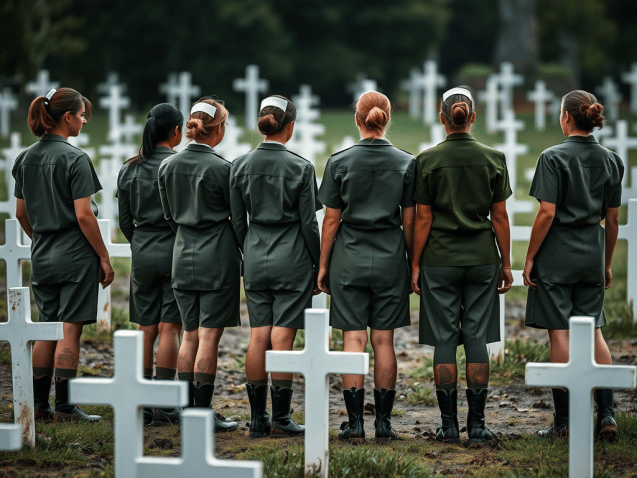
After the research concluded, Mollie was reinterred at Rosedale Cemetery in Orange, New Jersey—the same burial ground where her sisters Quinta and Albina, who had shared her fate as radium girls, already lay.6
The Missing Report
It wasn’t until 1924, amid declining business fueled by growing public fear, that US Radium finally commissioned an independent study into the deaths of the women. Conducted by Harvard physiologist Cecil Drinker, the study unsurprisingly revealed a troubling connection between the girls’ deaths and radium paint exposure.
Drinker and his team discovered that nearly the entire workforce showed abnormalities in their blood, suggesting a chilling possibility: the company had effectively poisoned its employees.7

When Drinker presented his findings to US Radium executives, outrage erupted. Rather than acknowledging the grim results, the President of US Radium sought to suppress the report. Meanwhile, the New Jersey Department of Labor launched its own investigation, demanding access to all documentation related to the studies. 8
In a desperate bid to protect their reputation, US Radium quietly altered Drinker’s original report, erasing any mention of the hazardous working conditions and the health impacts on their employees.9 The revised report, which they submitted to the government, falsely lauded the company’s facilities and safety standards, effectively issuing a clean bill of health for both US Radium and its workforce.
The Road to Justice
The turning point came when several Radium Girls, including Grace Fryer, decided to take a stand. In 1927, they filed a lawsuit against the United States Radium Corporation, seeking compensation for their medical expenses and suffering.10 Their case garnered national attention, highlighting the company’s exploitative practices.

By their first in-court appearance in January 1928, all five of the radium girls were so weak they couldn’t raise their arms to take the oath. Fryer had lost all of her teeth, and needed a back brace in order to sit in a chair. The next hearing was scheduled for April, but by then the dial painters were too ill to appear in court. Meanwhile, many of USRC’s witnesses were busy summering in Europe. The judge adjourned the case until September.11

Though debate raged, USRC resolved the case in 1938 with a settlement: a lump sum of $10,000 per person, plus an annual stipend of $600 for life. The figures, substantial on paper, hardly matched the depth of their ordeal. The verdict was a bittersweet victory; while it validated the girls’ struggles, it also highlighted the systemic failures that allowed such exploitation to occur.
The Aftermath and Legacy
The impact of the Radium Girls’ fight for justice extended far beyond the courtroom. Their case became a rallying point for labor rights advocates and highlighted the dangers of industrial practices that prioritized profit over worker safety. The public outcry prompted increased scrutiny of the use of radium and other hazardous materials in consumer products.

In the years that followed, regulations were established to protect workers from exposure to toxic substances. The legacy of the Radium Girls served as a catalyst for the development of occupational safety standards and the establishment of the Occupational Safety and Health Administration (OSHA) in 1970.
Changing Public Perception
The Radium Girls’ ordeal significantly altered public perception regarding the use of radium and other hazardous substances. What was once considered a miracle element became a symbol of corporate irresponsibility and the need for greater transparency in industrial practices. The case underscored the importance of prioritizing human health over profit and set the stage for future movements advocating for labor rights and environmental safety.
Final Thoughts
The story of the Radium Girls is not just a tale of tragedy but also one of resilience and triumph against overwhelming odds. Their bravery in the face of adversity paved the way for significant changes in labor laws and public health policies. As we reflect on their legacy, we are reminded of the importance of vigilance in protecting workers’ rights and the necessity of holding corporations accountable for their actions.
The Radium Girls’ fight is a powerful reminder that, while the past may be fraught with injustice, it can also serve as a catalyst for change, inspiring future generations to advocate for a safer, more equitable world.
For a list of the Radium Girls, click here.
Until next time, Keep Reading and Stay Caffeinated.
For those hungry to explore more, click below to find additional readings:

The Radium Girls: The Dark Story of America’s Shining Women. Written with a sparkling voice and breakneck pace, The Radium Girls fully illuminates the inspiring young women exposed to the “wonder” substance of radium, and their awe-inspiring strength in the face of almost impossible circumstances. Their courage and tenacity led to life-changing regulations, research into nuclear bombing, and ultimately saved hundreds of thousands of lives…

Marie Curie: The Life and Legacy of the Legendary Scientist Who Became the First Woman to Win a Nobel Prize examines the career that made Madame Curie one of the world’s most important figures. Along with pictures of important people, places, and events, you will learn about Marie Curie like never before.
Explore more blogs here:

If you’re looking for your next favorite read, I invite you to check out my series, The Raven Society. This spellbinding historical fantasy series takes us on a heart-pounding journey through forgotten legends and distorted history. Uncover the chilling secrets of mythology and confront the horrifying truths that transformed myths into monstrous realities. How far will you go to learn the truth?
The Writer and The Librarian (Book 1):
Signed copies at:
https://rlgeerrobbins.com/product/the-writer-and-the-librarian-the-raven-society-book-1/
Footnote:
- 2015-Lavine.pdf ↩︎
- Deadly occupation, forged report | Harvard T.H. Chan School of Public Health ↩︎
- Facts and ideas from anywhere – PMC ↩︎
- Facts and ideas from anywhere – PMC ↩︎
- Victims experienced severe anemia (lack of red blood cells), infections (low white blood cells), and easy bruising/bleeding (low platelets). Many also suffered from “radium jaw” and broken bones. ↩︎
- Mollie Maggia: Section 8, Row 6, Grave 71. Quinta Maggia McDonald: Section 9, Row 7, Grave 7. Other Radium Girls: The cemetery also serves as the final resting place for other victims, including Albina Maggia Larice, Ruth A. Saxer (Section 45), and Hazel May Vincent Kuser (Section Q, Lot #78, Grave #2). ↩︎
- Deadly occupation, forged report | Harvard T.H. Chan School of Public Health ↩︎
- The National Bureau of Standards and the Radium Dial Painters – PMC ↩︎
- HPHFALL2013web-deadly-environments.pdf ↩︎
- Radium Girls | Research Starters | EBSCO Research ↩︎
- The Tragic Case of the Radium Girls, and Their Impact on Labor Rights ↩︎
Sources:
Hot Times in “Radium Hospital”: The History of Radium Therapy at MSK | Memorial Sloan Kettering Cancer Center
Radium Girls: Living Dead Women | Headlines & Heroes
Radium girls | Environmental history
The Secrets of Life | Science History Institute


What are your thoughts?