
This post contains some affiliate links
Friends,
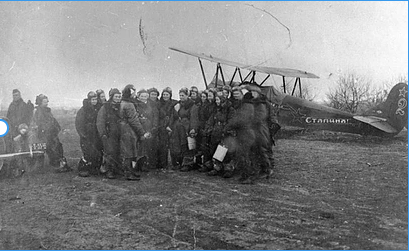
In the shadowy skies of World War II, a fearless group of female pilots known as the Night Witches soared through the dark, defying the odds and the conventions of their time. Formed in the Soviet Union, the 588th Night Bomber Regiment comprised young women who took to the air in outdated biplanes, armed only with determination and a fierce sense of purpose.
Under the cover of night, they executed daring bombing missions, often unsettling enemy forces with their stealth and skill. With their mischievous nickname inspired by the sound of their wooden planes gliding silently through the night, these remarkable aviators not only challenged gender norms but also left an indelible mark on military history, proving that bravery knows no bounds—especially when it’s fueled by camaraderie and a touch of audacity.
WWII
By June 1941, Germany had established a well-defined combat force widely regarded as the finest army of the 20th century. With their training, doctrine, and fighting skills dialed in, they had their sights set on the Soviet Union. Historically, Operation Barbarossa is considered a turning point in the war; had Germany managed to conquer Russia, the outcome would have been significantly different.
It is well known that Germany was never a logistically minded country and that you cannot win a war in winter in the Soviet Union. In the end, the Soviet Union scored the big win, but it was a brutal fight reminiscent of the brutality and mercilessness of the Mongols.
The Night Witches were created as a result of this battle.
The Creation of the First All-Female Air Regiment

Marina Raskova was the first woman navigator in the Soviet Air Force at the age of 19, a record holder of long-distance flights, and the first woman instructor at the Zhukovskii Air Academy. Her survival skills were proven when she made a bailout landing, surviving for ten days without water and almost no food, and then found herself back at the landing site to reunite with her female flight crew.
In the Soviet Union, military service was not restricted; they were at the forefront of equal opportunity. If you want to serve your country, by all means…go for it. They, however, were hesitant to accept applications from women seeking to become pilots. There was a tendency for applications to get lost, delayed, or denied for no real reason.
The First
Marina Raskova plays a highly significant role here. Among pilots, she is one of the most famous. And as she listens to the International Communist Women’s Day speech, she gets excited about the next step for women in the Soviet Union Air Force. A celebration of Soviet women’s mastery of technology and knowledge, becoming economic leaders, train drivers, engineers, and deputies to the Supreme Soviets of the USSR was the topic of the address.
Marina tells the crowd she will write a letter to Stalin asking for the creation of a women’s pilot unit. Everyone goes wild! Cheers and laughter! Vodka for everyone! I am not sure about the vodka, but it seems like it would have been a celebration.

Stalin agrees and authorizes three new air regiments: the 586th Fighter Aviation Regiment, the 125th Guard Bomber Aviation Regiment, and the 46th Taman Guards Night Bomber Aviation Regiment. The entire regiment was staffed with women pilots, engineers, mechanics, and support personnel.
A blog post by the Museum of Flight, entitled ‘Who Are The Night Witches?’, discusses the process of selecting women aviators based on their abilities to form the three all-female regiments: the 586 Fighter Aviation Regiment, the 587 Bomber Aviation Regiment, and the 588 Night Bomber Aviation Regiment.
Pilots with the highest skills became fighter pilots, and their male counterparts were outraged when new Yakovlev Yak-1s were given to them.
Middle-tier pilots were assigned to the bomber regiment.
Pilots with the lowest scores were assigned to fly night bombers and issued a plane no one else wanted.
The Planes That No One Else Wanted
The most feared of all the Aviation Regiments was the 46 Taman Guard Night Bombers, nicknamed the Night Witches by German forces. With an arsenal of only 40 Polikarpov Po-2 planes, each could carry two to six FAB-50 or one FAB-100 high-explosive bomb at a time; the pilots could carry out at least 18 missions a night.
It is an impressive feat of daring, as most nights the pilots would fly the first mission, return to their home station, reload, and then fly the second mission.

The planes themselves were not of the highest quality. The device’s popularity grew only because it was easy to control and cheap to construct and repair. However, pilots could only fly at low altitudes, were unable to withstand significant enemy fire, and lacked radar.
Choosing it for a dangerous mission seems logical?
Aside from that, they didn’t receive any new planes off the assembly line, but rather outdated crop dusters that had been used for training.
The aircraft was constructed from plywood with a canvas covering and lacked protection from the elements. Considering the Soviet Union’s mild climate, this seems reasonable. Additionally, they did not receive luxury items like parachutes, guns, or radios. Nevertheless, rulers, stopwatches, flashlights, pencils, maps, and compasses were provided.
I do not sense any impartial treatment here- do you?
Who Needs Equipment?
Members of the unit used paper maps to get to their destinations. They typically flew in groups of three to outmaneuver the German searchlights and flak guns. Upon being pointed at by the enemy’s searchlights, two planes flew through the trap before abruptly turning away. The third plane would then emerge from the darkness and strike the target. Each plane exchanged places until the pilots released all their bombs.
Because it was sneaking in for the kill, the plane dropping the bombs sounded like a witch’s broom- hence the title.
It is necessary to elaborate on stealth mode. Turning off their engines, they ‘glided’ to the target marked by a flare. They would then turn the plane back on and fly away if they made it through.
Is this even remotely safe? Did these missions receive a safety briefing?
True Warriors

The Nazis feared and hated them, and they awarded the Iron Cross medal automatically to anyone who downed one. Their primary mission was to frustrate the Germans by keeping them up all night, wondering where the next attack would come from. Eventually, the Germans became walking zombies, fighting during the day and waiting for the bombing at night. According to the German service members, the women were:
all criminals who were masters at stealing and had been sent to the front line as punishment or they had been given special injections that allowed them to see in the night.
In an ironic twist of fate, German service members never realized that their tormentors were women pilots until after the war.
No One Walks Away Unharmed
In all, the regiment flew over 23,000 missions and dropped more than 3,000 tons of bombs and 26,000 incendiary shells. It was the most decorated female unit in the Soviet Air Force, with many of its pilots having flown over 800 missions. Twenty-three women were awarded the ‘Hero of the Soviet Union’ title, and 32 women paid the ultimate price.
Marina Raskova, who was directing two other Pe-2s to a safe airfield, was killed on January 4th, 1943, when she was forced to land on the Volga Bank, with the whole crew dying as a result. Raskova was given the first state funeral of the war, and her ashes were buried alongside those of Polina Osipenko, another pilot. She was awarded the Order of the Patriotic War, 1st Class, posthumously, and the regiments she created served throughout the war.
One of the most celebrated Night Witches, Nadezhda Popova, flew 852 missions. In one instance, Popova returned from an assignment with 42 bullet holes in her plane, helmet, and map. However, Popova was never hit, nor did her delicate plane fall apart.
The End Of An Era
During World War II, more than 500,000 women served in the Soviet Union military in combat roles. Their skills as snipers, anti-aircraft artillery operators, and tank commanders were highly regarded. In all, more than 200,000 women in combat received medals for bravery, including 89 who were honored as Soviet heroes.
The Night Witches made their last flight just 60 km from Berlin on May 4th, 1945. The Germans surrendered three days later.

In the aftermath of World War II, their planes were deemed too slow to take part in the victory day parade, and they were disbanded six months later.
Final Thoughts
Friends! This was the most enjoyable experience I’ve had while researching a brand-new topic! If you have made it this far, thank you! I rarely get to highlight the roles women played in history, especially when it comes to women supporting a war. It is personal, and I am not ashamed to say – I wish more stories like this were discussed for female veterans.
As always, my friends, I invite you to do your own research. There is no way I could fit years of WWII history into a single blog, but I had fun researching the Night Witches.
Until next time, Keep Reading and Stay Caffeinated.
For those hungry to explore more, click below to find additional readings:

Night Witches: A History of the All Female 588th Night Bomber Regiment. The 588th Night Bomber Regiment was one of the most decorated units; each member had flown more than 800 missions by the end of the war, and twenty-three were awarded the Hero of the Soviet Union. Despite all the awards, the unit is largely forgotten now. This book looks at the history of one of the most daring aviation units ever commissioned.

The Girls Who Stepped Out of Line: Unsung WWII Heroines Who Risked Everything for Freedom. In The Girls Who Stepped Out of Line, Major General Mari K. Eder unearths the remarkable true stories of 15 unsung heroines whose courage, brilliance, and defiance altered the course of World War II. These women didn’t serve for recognition; they served because it was right.
Subscribe below to stay up to date on myths, legends, mysteries, and the chaos I call my life.

If you’re looking for your next favorite read, I invite you to check out my book, The Raven Society. This spellbinding historical fantasy series takes us on a heart-pounding journey through forgotten legends and distorted history. Uncover the chilling secrets of mythology and confront the horrifying truths that transformed myths into monstrous realities. How far will you go to learn the truth?
The Writer and The Librarian (Book 1):
Signed copies at:
https://rlgeerrobbins.com/product/the-writer-and-the-librarian-the-raven-society-book-1/
Explore more blogs here:
Sources:
The Soviet Night Witches – Wright Museum of World War II
Meet the Night Witches– History Channel
Night Witches: Soviet Women Who Flew Combat Missions in WWII | National Air and Space Museum (podcast)




What are your thoughts?