
This post contains some affiliate links
Friends,
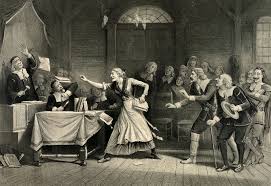
In classrooms across America, children’s eyes widen at the horrors of the Salem Witch Trials, where paranoia turned neighbor against neighbor and justice gave way to bloodlust. June 10 marks the day Bridget Bishop’s neck snapped at the end of a rope, her body swinging before a crowd that had once called her friend. What unspeakable terror gripped the hearts of those who lived with the constant fear that a pointed finger could send them to the gallows next?
It wasn’t only in Salem.

Salem Village may be etched into our collective nightmares as the epicenter of the 1692 witch hunt, but the accused were dragged screaming from homes across dozens of terrified communities. Andover—a town that history has largely forgotten—actually yielded more victims to the gallows than Salem Village itself, with 42 souls condemned compared to Salem’s 26.
Yet it was in Salem where justice transformed into cruelty, where trials became spectacles of horror, and where the hangman’s noose swung with such merciless frequency that it forever stained American soil.
- Andover bore the heaviest burden of witchcraft accusations during the 1692 trials, surpassing all other towns in the number of the accused. For additional historical information, click here.
There was no proof.
Dozens of Salem’s blameless townsfolk met their end at the gallows, condemned by spectral evidence. In the dim courtrooms, witnesses would swear under oath that the defendant’s spirit had visited them in the night, pinching or choking or whispering curses—even as the accused’s physical body was somewhere else.
The ‘witch tests’—brutal, medieval procedures imported from the blood-soaked tribunals of Europe—were weaponized during the Salem witch trials to extract proof of the accused’s unholy pacts with Satan. When a suspected witch somehow survived one ordeal, the merciless court subjected them to another, and another, until their broken body or terrified confession finally confirmed their guilt. These tortures included:
Incantation Test – The accused would verbally order the devil to leave the afflicted victim. If the victim recovered, the accused was deemed a witch.

Prayer Test
The accused were made to recite the Lord’s Prayer or a selection of scripture from memory. If they made an error, they were a witch.
Pricking Test
The accused were poked and scratched by their alleged victims until they bled. If the victim’s afflictions were relieved, that was proof that the accused was guilty of witchcraft.
Skin Test
Any appearance of moles, freckles, birthmarks, scars, or extra nipples was proof of a contract with the devil.
Swimming Test (or dunking)
Accused witches were bound at the wrists and ankles and dropped into a body of water. If they floated, they were guilty of witchcraft. If they sank, they were innocent (but often drowned anyway).
Touch Test
The accused witch would touch their victims. If the victims felt pain, the witch was proven guilty.
Weight Test
Witches were supposedly very light, so courts tried to weigh them against the weight of the Bible. When the accused weighed more than the book, the court issued another test to determine their guilt.
Witch Cake Test
If a witch made a cake with her urine and fed it to a dog, the dog would supposedly have adverse effects.
These ‘witch tests’ used in both Europe and New England were impossible to pass. Most notable was the case of minister William Burroughs, who attempted to pass the Prayer Test by reciting the Lord’s Prayer on the gallows.
His perfect recitation only further proved his supposed guilt, as Cotton Mather declared that “the devil often had been transformed into the Angel of Light.”
It wasn’t just women who were accused.
Most of the accused individuals were middle-aged or elderly, with one notable exception. Dorothy Good, the four-year-old daughter of Sarah Good, was accused of being deranged and animalistic after consorting with the devil. Dorothy confessed her supposed crimes to the authorities and claimed to have seen her mother with the devil. Dorothy’s confession allowed her to be released on bond after nearly seven months in prison.

Giles Corey refused to stand trial because he believed the court had already decided his fate. He didn’t want his property to be confiscated in the event of a guilty verdict. Because he refused to comply with the court, he was given the sentence of being pressed to death. He was stripped naked and covered with heavy boards. Large rocks and boulders were then laid on the planks, which slowly crushed him over the course of three days.
Another executed man was John Proctor, a wealthy farmer who spoke out against the witch trials, particularly after his wife, Elizabeth, was arrested for witchcraft. In response, John was also accused. He attempted to save himself by writing to the clergy in Boston that mass hysteria had taken over the village. However, they acted too slowly to save him: He was executed on August 19, 1692.
No one was untouchable.
The first accusations during the Salem Witch Trials were against people marginalized by society. But the allegations didn’t stop there. They soon spread to individuals, regardless of their gender, class, or social status within the community. In late May 1692, Sir William Phips, the first royal governor of Massachusetts, established the criminal court to conduct the Salem witch trials. But in October 1692, his wife, Mary, was accused of sorcery.

Not even ministers could escape. George Burroughs was named village minister in 1680, but many disapproved of his religious views, and he was often unpaid. When he stopped being compensated, he left Salem. The Putnam’s, a prominent family he’d borrowed money from, sued Burroughs for unpaid debts and later accused him of witchcraft. Burroughs was brought back to Salem, tried, and executed.
It didn’t just affect adults.
As autumn descended on Massachusetts in 1692, hysteria claimed even the animal kingdom. In Andover, a neighbor’s dog met its end at the villagers’ hands after a young girl claimed the creature had cast a spell upon her. Meanwhile, in nearby Salem Village, another canine fell victim when local girls insisted John Bradstreet was using dark powers to torment the animal. The dog was dispatched swiftly; the accused man vanished into the wilderness, choosing flight over the fate that surely awaited him.
We are still trying to right the wrong.
In 1711, colonial authorities pardoned some accused and compensated their families. But it was only in July 2022 that Elizabeth Johnson Jr., the last convicted Salem “witch” whose name had yet to be cleared, was officially exonerated. Click here to read the reversal.
Total deaths for Salem.
June 10, 1692 –

Bridget Bishop. Age: 60. Bishop had a somewhat controversial reputation in the community before the trials, which could have influenced the accusations against her. Known for her strong personality, she had previously been accused of witchcraft in 1680 but was acquitted. Bridget Bishop was accused of witchcraft by several young girls, Ann Putnam Jr. and Elizabeth Hubbard, who said she was responsible for their fits and unusual behavior.
July 19, 1692 –
Rebecca Nurse. Age: 71. Nurse was a well-respected and elderly member of the community, known for her piety and charitable acts. Her reputation made the accusations particularly shocking, as many in Salem found it difficult to believe she could be involved in witchcraft. During her trial, she maintained her innocence, and many community members testified on her behalf, expressing their belief in her character. Despite the support she received, the jury found her guilty, influenced by the prevailing hysteria and the testimonies of the afflicted.
Sarah Good. Age 46. Good was a homeless woman who had fallen on hard times. She was known to beg for food and had a contentious reputation in the community. Her marginalized status likely contributed to her being an easy target for accusations. During the trial, she maintained her innocence, but the allegations and the prevailing fear of witchcraft heavily influenced the court. She was found guilty of witchcraft, primarily based on the testimonies of the afflicted. The court’s reliance on spectral evidence (dreams or visions) played a significant role in her conviction.

Boston: Houghton, Mifflen & Co. 1876
Elizabeth Howe. Age: late 50’s. Elizabeth Howe was a well-respected member of her community, known for her good character. During her trial, she maintained her innocence and had supporters who testified to her good character and behavior. Her brother-in-law was one of the ‘prime witnesses.’ Joseph Howe claimed that Elizabeth had previously threatened him and his family, suggesting that they had experienced misfortunes because of her.
Susannah Martin. Age: 70. Martin was known as a strong-willed individual, and her reputation as a midwife and healer may have made her a target. She had a history of disputes with her neighbors, which could have fueled the accusations against her. Susannah Martin was accused of witchcraft as early as 1669, when she faced charges in the town of Amesbury. Neighbors claimed she had engaged in witchcraft and had caused harm through her supposed powers. In 1669, she was brought to trial but was acquitted.
Sarah Wildes. Age: 65. Wildes was a widow and a relatively well-known figure in the community. Her status as a woman living independently may have contributed to the suspicion directed at her, as societal norms at the time often viewed strong, independent women with mistrust. Before the Salem witch trials in 1692, Sarah Wildes faced accusations of witchcraft as early as 1672. She was accused in a case involving a neighbor who claimed Wildes had bewitched her cattle, but she was acquitted of wrongdoing.
August 19, 1692 –
George Burroughs. Age: early 40’s. Burroughs was a former minister in Salem Village and had previously served in several other towns. His background as a clergyman made his accusations particularly notable. Much of the evidence against Burroughs relied on spectral evidence, where witnesses claimed to see his spirit or specter harming them. This type of evidence was highly controversial and later came under criticism. His execution was notable because, during the hanging, he recited the Lord’s Prayer perfectly, which some viewed as evidence of his innocence, as it was believed that a witch could not do so.
Martha Carrier. Age: 38. Martha Carrier was known as a strong-willed woman and had a reputation for being outspoken. The title “Queen of Hell” was used in the context of the Salem witch trials to characterize Martha Carrier as a particularly powerful witch. This label was part of the broader narrative that portrayed her as a leader among those accused of witchcraft. During her trial, she defended herself vigorously and maintained her innocence. She pointed out discrepancies in the testimonies against her and emphasized the lack of credible evidence. Despite her defense and the support of some community members who testified on her behalf, Carrier was convicted of witchcraft.
George Jacobs. Age: early 70’s. Jacobs was a well-known figure in the community, and some of the accusations against him stemmed from personal grievances and rivalries. Additionally, he was known to have had disputes with neighbors, which may have fueled the allegations against him. Margaret Jacobs was among the young girls who claimed to be afflicted by witchcraft. In her testimony, Margaret claimed that her grandfather, George Jacobs, had bewitched her and that she had seen his specter harming her.
John Proctor. Age: 60. Proctor had a contentious relationship with some of his neighbors and was known to have spoken out against the witch trials. His outspoken nature and dissent against the court’s proceedings made him a target for accusations. During the trial, Proctor defended himself vigorously and openly criticized the court’s reliance on spectral evidence, which was a significant part of the accusations against him. His wife, Elizabeth Proctor, was also accused of witchcraft around the same time. Despite his defense and the testimonies of character witnesses who spoke to his good reputation, Proctor was convicted of witchcraft.
John Willard. Age: 35. Willard was a respected member of the community, serving as a constable. Willard was reportedly reluctant to arrest individuals based solely on the accusations of witchcraft, particularly given the lack of substantial evidence against them. His refusal to comply with orders to arrest certain accused individuals demonstrated his skepticism of the witch hunt and the methods being used in the trials. As with many others accused, he faced a court that relied heavily on spectral evidence and the testimonies of the afflicted.
September 19, 1692 –
Giles Corey. Age: 80. He pleaded not guilty to all charges but refused to stand trial. As a result, he was forced to undergo Peine forte et dure, a process whereby a defendant has increasingly heavier weights placed upon their chest until they either cooperated with the court or died. Corey withstood the torture for two days before succumbing; his last words were reportedly “more weight.” His wife, Martha, would be executed herself three days later.

Geo. A. Kimball, Publisher, Boston, 1892.
September 22, 1692 –
Martha Corey. Age: 72. Martha Corey was known in the community for her strong personality and independent nature. She was also a member of the Salem church, which complicated her standing when she began to question the validity of the witch trials and the court’s reliance on spectral evidence. This dissent may have made her a target for accusations. Despite her defense and the support from some members of the community who testified on her behalf, Martha Corey was convicted of witchcraft.
Mary Eastey. Age: 58. Mary Easty was a respected member of the community and the sister of Rebecca Nurse, another prominent figure who was accused and executed for witchcraft. This familial connection may have influenced perceptions of her character and the severity of the accusations against her. During her trial, she maintained her innocence and expressed her belief in the justice system, famously stating in her plea that if she were guilty, she wished to be punished but that the court should not condemn an innocent person.
Alice Parker. Age: unknown. Alice Parker was known to have had disputes with some neighbors, which may have contributed to the accusations against her. She was also specifically implicated in the death of her mother, Mary Parker, by the use of witchcraft. As with many other accused individuals, the evidence against her largely relied on spectral evidence, where witnesses testified to seeing her spirit causing harm.
Mary Parker. Age: unknown. Mary was the mother of Alice Parker, who was also accused of witchcraft and implicated in the accusations against her mother. This familial relationship added a layer of complexity to the situation, as accusations often circulated among family members during the trials.
***If you are as confused as I am right now, because how does Alice Parker kill her mother and yet her mother is alive to be executed with her daughter… all I can say is that this MAY have been a case of mistaken identity, but not much is recorded about her trial. Further research is required- but the records are not clear-cut.
Ann Pudeator. Age: 70. Ann Pudeator was specifically accused of causing the deaths of five people through her alleged witchcraft.
Wilmot Redd. Age: 70’s. Redd was accused of bewitching several individuals, leading to claims that she had caused harm or afflictions, particularly to young girls. Personal conflicts and rivalries within the community influenced the accusations against Redd. Mother-In-Law to George Burronghs (executed on August 19). Only citizen of Marblehead to be executed.
Margaret Scott. Age: late 70’s. Margaret Scott was an older woman, and during the witch trials, older women were often more vulnerable to accusations. Societal prejudices against women, particularly those who were single, widowed, or without strong family support, made them more susceptible to being labeled as witches. Only citizen of Rowley to be executed.
Samuel Wardwell. Age: 49. Arrested with wife and daughter. Samuel Wardwell initially confessed to witchcraft during his trial. This confession was not uncommon, as many accused individuals felt immense pressure to confess in hopes of saving themselves from execution. After making his confession, Wardwell later recanted it. He stated that his confession was made under duress.
Not all those who died were executed.
While the accused languished in prison cells awaiting judgment, five souls perished—some wasting away from hunger, others succumbing to wounds inflicted during questioning. Among these forgotten victims was little Mercy Good, daughter of Sarah, who drew her first and final breaths behind prison walls.
Lydia Dustin– Died in Prison, March 10, 1693.
Ann Foster– Died in Prison, December 3, 1692.
Sarah Osborne– Died in Prison, May 10, 1692.
Roger Toothaker– Died in Prison, June 16, 1692.
Final Thoughts
The Salem witch trials cast a long shadow over America’s legal foundations. As the founding fathers crafted our justice system, they deliberately turned away from Salem’s presumption of guilt and its obsession with extracting confessions at any cost. The bitter lessons of those proceedings gave birth to our modern principles: the presumption of innocence, the right to legal representation, and courts that demand tangible evidence rather than spectral visions of dancing with the devil.
And so concludes this glimpse into America’s darkest chapter—now packaged as gift-shop magnets and guided tours, while the echoes of suffering still reverberate through generations of families who cannot reduce their inheritance to souvenir T-shirts.
To take a virtual tour of the site related to the 1692 Salem witch trials, click here.
Until next time, Keep Reading and Stay Caffeinated.
For those hungry to explore more, click below to find additional readings:

Killing the Witches: The Horror of Salem, Massachusetts. Killing the Witches tells the dramatic history of how the Puritan tradition and the power of early American ministers shaped the origins of the United States, influencing the founding fathers, the American Revolution, and even the Constitutional Convention.

In the Devil’s Snare: The Salem Witchcraft Crisis of 1692. truck by the similarities between what the refugees had witnessed and what the witchcraft “victims” described, many were quick to see a vast conspiracy of the Devil (in league with the French and the Indians) threatening New England on all sides. By providing essential context for the famous events and casting her net well beyond Salem’s borders, Norton sheds new light on one of the most perplexing and fascinating periods in our history.
Subscribe below to stay up to date on myths, legends, mysteries, and the chaos I call my life.

If you’re looking for your next favorite read, I invite you to check out my book, The Raven Society. This spellbinding historical fantasy series takes us on a heart-pounding journey through forgotten legends and distorted history. Uncover the chilling secrets of mythology and confront the horrifying truths that transformed myths into monstrous realities. How far will you go to learn the truth?
The Writer and The Librarian (Book 1):
Signed copies at:
https://rlgeerrobbins.com/product/the-writer-and-the-librarian-the-raven-society-book-1/
Explore more blogs here:
Sources:
Accusers and Accused – Salem Witch Trials – Research Guides at Boston Public Library
Historical Introduction – Colonial Society of Massachusetts



What are your thoughts?